




Opening the Archive 01
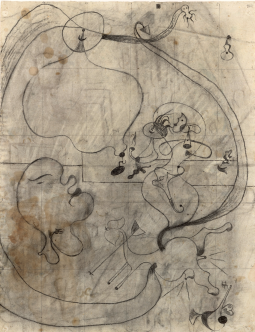
The exhibition inaugurates this space and which gives an account of the magnitude of the operation to transfer the fonds to its new home.
The exhibition inaugurates this space and which gives an account of the magnitude of the operation to transfer the fonds to its new home.
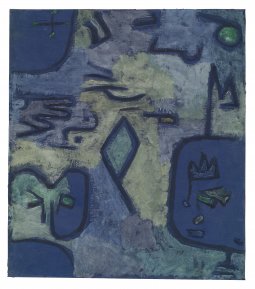
The exhibition Paul Klee and the Secrets of Nature centres on the ongoing fascination of the Swiss-German artist for the observation of nature and natural phenomena. The exhibition is structurated in four sections, each of which includes work of other artists who also explored aspects of natural phenomena. As female artists, however, they did not receive due attention or consideration in their day
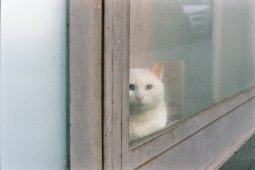
Bimbo is an exhibition of photographs in the lobby of the Fundació Miró, which accompanies the temporary exhibition Paul Klee and the Secrets of Nature. It takes the passion for cats shared by the dancer and photographer Nora Baylach and Paul Klee as the starting point.
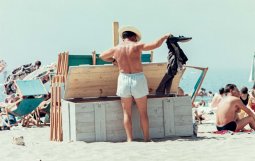
Long days, short nights features photographs that Joaquim Gomis took during the summers he and his family spent in Sitges and Ibiza.
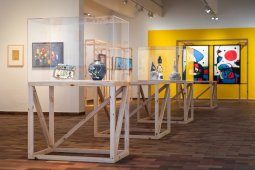
Miró. His Most Intimate Legacy unveils a relatively unknown facet of Miró as a collector of his own work, which was expressed in the creation of three personal collections: his own; that of his wife Pilar; and the collection of his daughter Dolors. This project seeks to renders homage and express gratitude to the artist as well as to the three generations of the Miró family that have shown leadership in the universal artist’s commitment to the Fundació Joan Miró and the city of Barcelona.
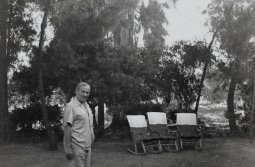
This exhibition presents a selection of photograph deposited by Enric Tormo Freixes in the archive of the Fundació Joan Miró. They are all photographs taken in the 1940s and 1950s, portraying Miró in his family and professional contexts, whether in Barcelona, in Mont-Roig or in working trips to Paris.
Grounded in the proposition of continuing to address the diverse questions affecting emerging art, for its 2022 programme the Espai 13 of the Fundació Joan Miró presents Dive and Immersion, an exhibition series curated by Pere Llobera, with artistic proposals by Victor Jaenada, Marcel Rubio Juliana, Marria Pratts and Martín Vitaliti.
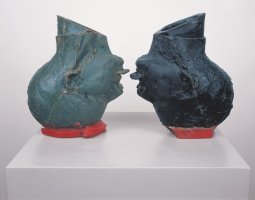
The Point of Sculpture offers an overview of the practice of modern and contemporary sculpture from an asynchronous, heterogeneous perspective that also includes older pieces and anonymous objects. The exhibition, arising from the ambition of twentieth-century sculpture to move beyond representing and generating images, also aims to show the major transformation of this discipline in the twenty-first century with the implementation of new techniques and the emergence of new imaginaries and sensibilities.
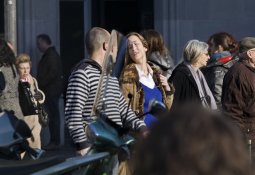
Between 2006 and 2009, the years leading up to the global financial crisis, Juande Jarillo (Granada, 1969) spent his free time seeking out moments of people gathering together or crossing paths in Barcelona. Jarillo set up his camera in different locations in the city centre, sometimes riding the tourist bus, and waiting for the precise moment when a conjunction of forms, an interplay of gazes and reflections, or a composition of figures or of urban artefacts would unfold. His aim was to capture the almost invisible textures, light and vectors that cross the urban landscape at a given moment.
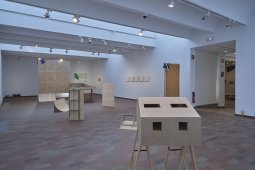
The exhibition Shared Studios. Three Case Studies presents the work, production, and learning dynamics that arise in shared studio spaces among artists in the Barcelona art scene.
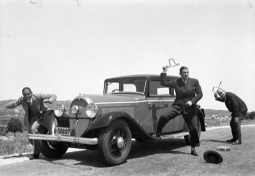
The exhibition Broken Games is a selection of 13 photographs by different authors: some were taken by Joaquim Gomis’ father, others by Joaquim Gomis (1902-1991) himself, and one by Gomis’ wife, Odette Cherbonnier. What prompted this exhibition was a desire to present materials from the family albums in the Gomis Archive held at the National Archive of Catalonia, which evoke summertime joie de vivre as well as fun vacation and leisure time.
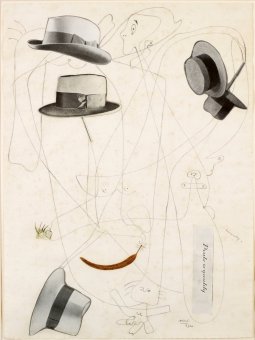
Miró-ADLAN: An Archive of Modernity (1932-1936) reconstructs the key role of the group of artists and intellectual known as ADLAN (Amics de l’Art Nou [Friends of New Art]) in introducing modernity to the Barcelona of the 1930s, during the years of the Spanish Republic. While in major European cities avant-garde movements had the support of critics and collectors, here modernity needed the impetus of an enthusiastic group that sought to regenerate Catalan culture and adopted Joan Miró as its leader in the promotion of new art.


